Itineraries your visitors can actually do.
Every destination publishes suggested itineraries. trippl turns yours into map-based routes visitors can load, customize, share with the people they travel with, book from, and take with them on their phone. And every one of them reports back to you.
A list is not an itinerary.
Neither is an article.
Your team already writes great itineraries. The problem is where they live. A blog post can be read, but it cannot be loaded, changed, shared, or followed. So the visitor copies your stops into another app, and from that moment on you have no idea what they did.
From your suggested route to their real trip in three steps.
- 01
You publish the route
Build pre-built itineraries from your own listings. Pick the stops, set the order, give it a name. The map, the drive times, and the distances are calculated for you.
- 02
Visitors make it theirs
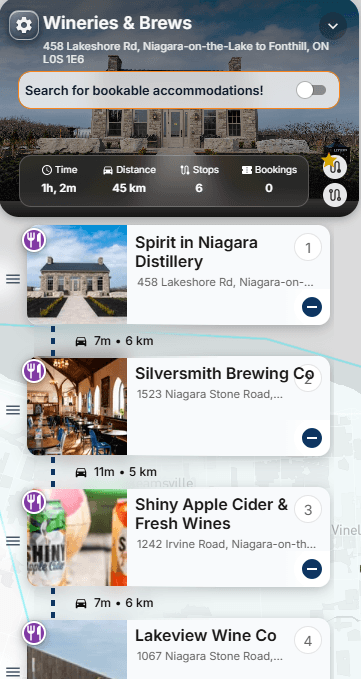
A visitor loads your itinerary into their own trip and customizes it. Add a stop, drop a stop, reorder by drag-and-drop, plan separate days for different travelers in the group.
- 03
They share it, book it, and go
One link sends the whole trip to the group. Accommodations are bookable inside the itinerary. And because trippl works on a phone, the plan comes with them to your destination.
Customizable. Shareable. On a map. Reporting back.
Any of these on its own is a feature. Together they are the difference between content a visitor reads and a trip a visitor takes.
On a real map
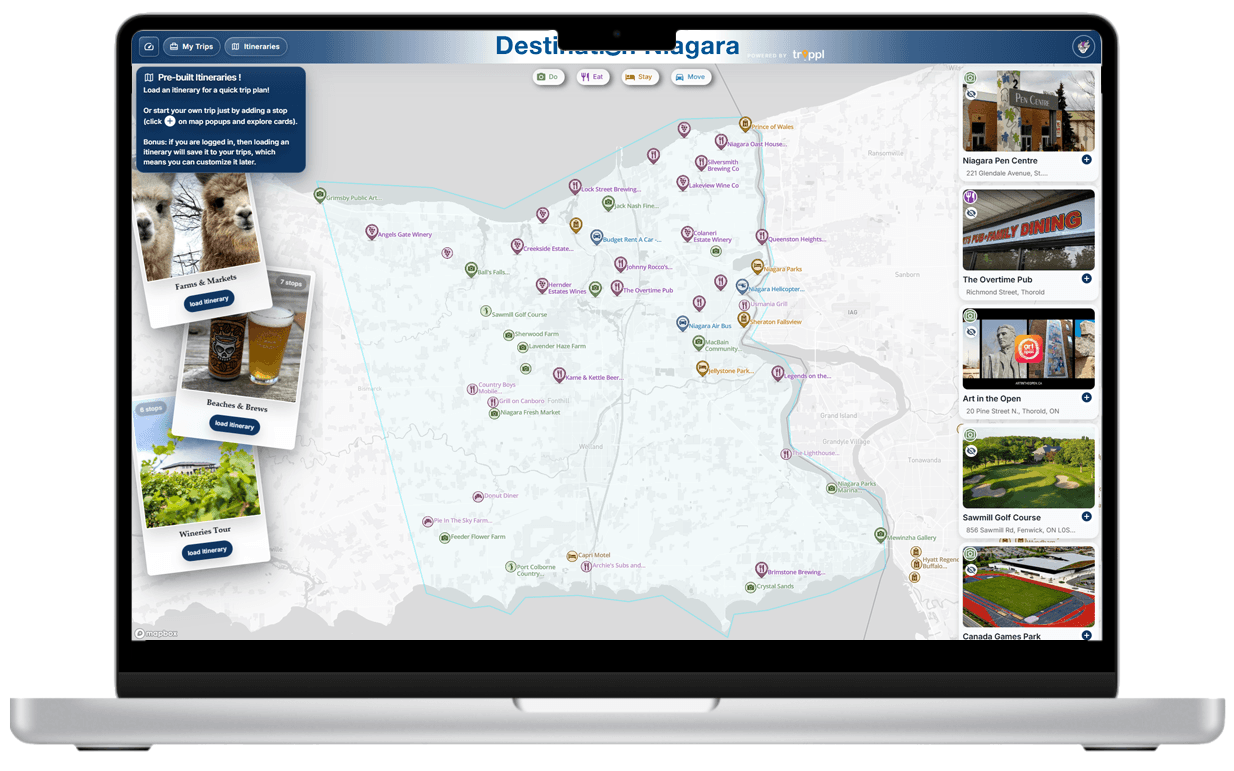
Every stop is a live listing with a pin, a photo, and a route to the next one. Time and distance between stops are shown, not guessed.
Pre-built by you
Your team publishes the routes you want visitors to take. Wineries, farms and markets, beaches and brews, whatever sells your destination.
Customizable by them
Visitors load your route, then change it. Drag-and-drop stops, add a night, split days for different travelers in the same group.
Shareable by link
One link carries the whole trip to everyone traveling. The people who did not do the planning can still see the plan.
Bookable inside
Accommodations book from within the itinerary through our Priceline/Booking Holdings partnership. Activities and food are next.
Reports back to you
Loaded, customized, shared, and booked. Every itinerary sends first-party planning data to your dashboard.
Every itinerary tells you what visitors planned.
A blog itinerary gives you a pageview. A trippl itinerary gives you the plan itself: the route a visitor picked, the stops they kept, the operators they added, and the stay they booked. That is first-party data on how people plan your destination, which is the thing your board keeps asking for and your analytics cannot produce.
It is also the first time you can show a local operator exactly how many planned trips included them.
- Loaded
Which pre-built itineraries visitors choose, and how often.
- Customized
Which stops get added, removed, or reordered once the trip is theirs.
- Shared
How many trips get sent to a travel companion, and how far they spread.
- Booked
Accommodation bookings made from inside the plan, attributed to the itinerary.
Destinations like yours already publish their itineraries this way.
Regional DMOs in Ontario, Prince Edward Island, and Nova Scotia run trippl on their own websites today.





Frequently Asked Questions
See one of your own itineraries on the map.
Bring a route your team has already published. In thirty minutes we will show you what it looks like as something a visitor can load, share, and follow.